By Ivo Wakounig
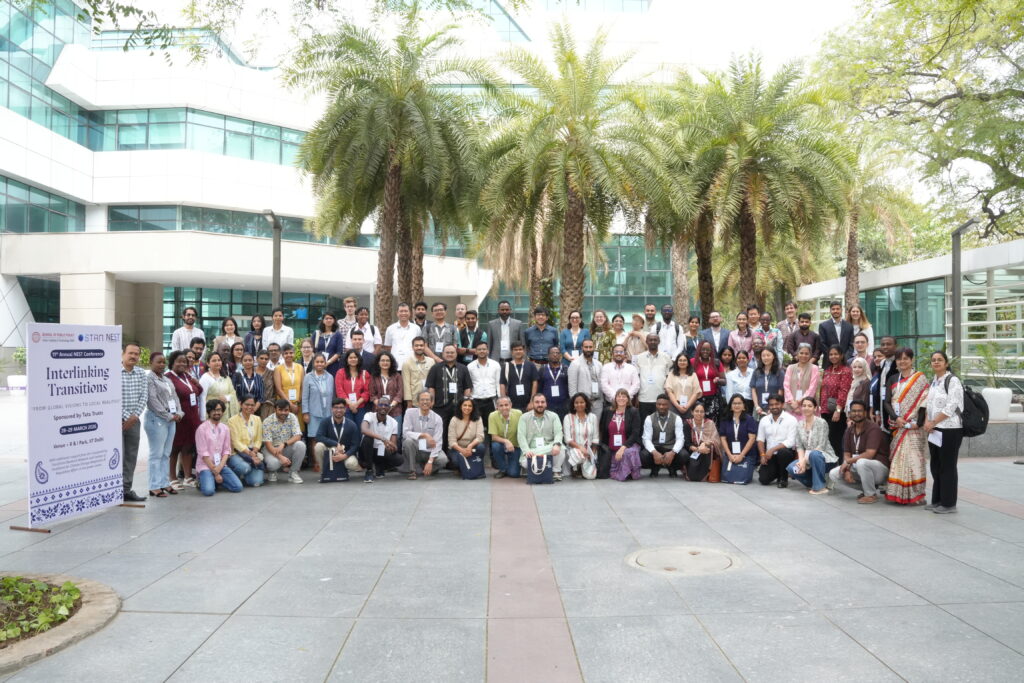
The 11th annual conference of the Network of Early Career Researchers in Sustainability Transitions (NEST) took place from 28 – 29 March 2026 at the Indian Institute of Technology (IIT) in Delhi. As the first conference of the community of sustainability transitions researchers solely organised in the Global South (GS), this conference was a moment to enrich the entire transitions field with non-western perspectives.
Transitions research as an academic field has emerged from Dutch academia around 30 years ago. Currently, it has its main presence in institutes from the Global North (GN), such as the Netherlands, United Kingdom, Sweden, Switzerland, and so forth. In the past years, there have been numerous calls to move the field beyond knowledge rooted in the GN, for example by pluralising and decolonising transitions research.
This need to pluralise and decolonise the field was one of the motivating factors to organise the 11th edition of the annual NEST conference in Delhi, India. While the conference turned out to be a great success, throughout the entire process, I experienced numerous tensions and odd situations which I would like to reflect upon in this blog. Overall, through the lessons I have learned, I am left with the impression that large parts of the transitions community in the GN are not interested in pluralising transitions (at least in practical terms) but prefers to remain within its own epistemic boundaries. These reflections below stem from me, being a white man in the organising committee (OC) of the 11th NEST.
Some Background
I started my PhD at Eindhoven University of Technology (one of the key universities in the transitions field) in October 2023 and, quite obviously, indulged in the existing body of transitions literature. Through my participation at the STRN / NEST methods school in Rotterdam in summer 2024, conversations with my partner, and eventually through being a member of the OC of the 10th NEST conference, which took place in Brighton (UK) in 2025, I started picking up literature which critiqued the dominant GN thought in transitions research. My partner and I also worked on an article which investigates transitions literature stemming from the GS, so quite naturally I became sensitised to tensions in the field.
Many scholars who took part in the 10th NEST conference shared perspectives on broadening and decolonising the field. In retrospect, this is quite strange, given that most participants were white / came from institutions from colonisers’ countries (such as me) and that many participants from the GS who were supposed to take part in the conversation were denied entry to the United Kingdom. Regardless, it was this ambition to broaden the perspectives by including GS scholarship which some of the members of the newly formed OC for the 11th NEST took with them. Another motivation to organise it in the GS were the visa barriers most scholars from the GS face when wanting to enter GN countries. For the 10th NEST in Brighton, many visas have been rejected by the UK, have taken too long to process, or were simply too expensive (read here about visa barriers scholars from the GS can face), which jeopardised exchange between scholars from different regions.
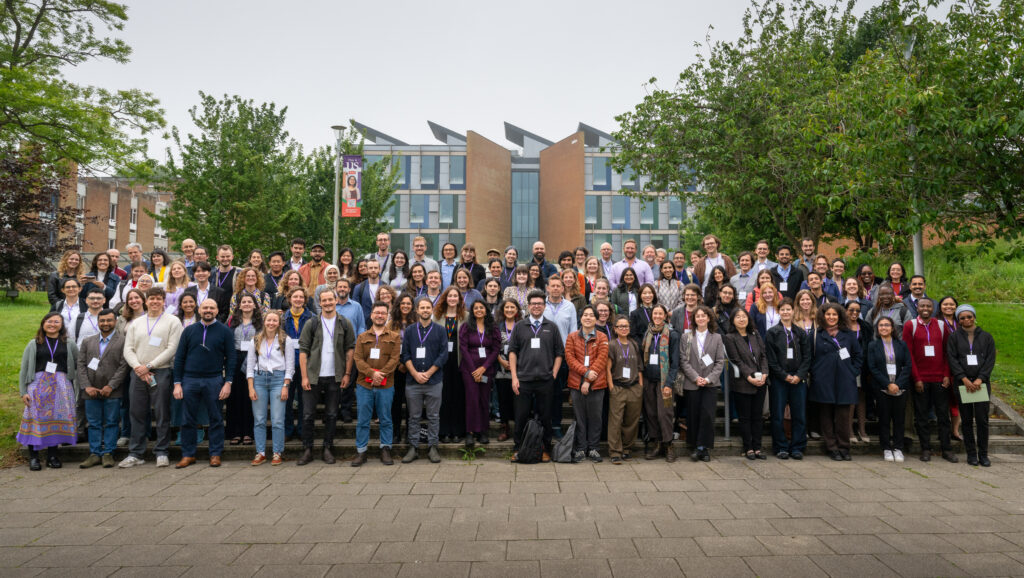
The OC of the 11th NEST conference quickly formed after the 10th edition and consisted to a large extent of white early career researchers (ECRs). As some OC members, including me, brought in their experience from the previous NEST, most members agreed that 11th NEST would be a good moment to broaden the field. From early on we received interest to organise NEST at IIT Delhi, one member was thinking of China, two suggested locations in Europe. Something which offered to be off to a good start quite quickly showed the challenge you face when organising a transitions conference in the GS.
Challenges Incoming
After having decided on the selection process for the host institution of the 11th NEST conference, by the time the deadline for proposals had passed, we received only one bid from IIT Delhi. Our initial thinking was that some people had pulled out, which is totally fine, but in an OC meeting it turned out that two institutions from the GN simply missed the deadline and did not submit their proposal on time. In interest of allowing these institutions to submit a bid, the OC decided to extend the deadline by two days, after which we received their proposals. Strangely enough, these proposals strongly resembled the document which has been submitted by IIT Delhi. Over the weekend, OC members voted on the winning bid by ranking them.
To my own surprise, a GN host was announced as the winner of the vote, after which enthusiasm erupted in the OC. The surprise stemmed from the fact that large parts of the OC were supportive of hosting the next NEST in a GS country, which would indicate a majority for a GS host. Hence, we asked to get insights into the vote only to find out that four (!) votes have not been counted due to technical errors in the voting sheet. It took the OC a week of endless phone calls and back and forth messages to find out how these technical errors occurred. As soon as the error was corrected, IIT Delhi emerged as the winner of the vote by a great margin. After communicating the final outcome to the OC, some OC members got pressured by the representative of the GN institution which won in the faulty vote to forego the correct vote due to alleged commitments already made. The OC, however, adhered to the correct vote and chose IIT Delhi as the host for the 11th NEST conference. This entire process left me quite puzzled, as I did not expect these kind of problems in an OC for a transitions conference. Through that I learned that scholars from the GS have to put in more work than scholars from the GN to get access to the same opportunities.
Lesson 1: Transition scholars from the Global South have to put in more work than scholars from the Global North to get access to the same opportunities.
Visibly, there was suddenly way less enthusiasm in the OC about Delhi being chosen as the location for the 11th NEST conference. This lessened enthusiasm manifested in less messages of congratulations, but, more importantly, most GN OC members suddenly vanishing from the OC. Even worse, I ended up being the only white man in the OC, while the remaining members were mostly women from the GS. An OC which started out as being quite diverse (but mostly women), ended up being made up of almost only women from the GS. What a start, but this taught me that most people in the GN are only interested in helping organise conferences in their backyards.
Lesson 2: Global North transition scholars are not interested in organising conferences in the Global South.
Valuable time was lost due to these challenges. As the climate conditions in Delhi give you certain time windows during which you can(not) organise conferences, we had to either organise it latest by March or from October 2026. October would have been too far in the future and jeopardise the organisation of this and the subsequent 12th NEST, meaning that the OC rightly decided to organise it at the end of March 2026. However, this left us with only five months for the entire organisation and we had to review the abstracts during the Western Christmas break. While most organisational burden was on the shoulders of the hosts, as they had to organise all the logistics on site, most doubts regarding the timelines came from GN OC members. This went so far that we had cases of GN members pulling out of the OC because they could not contribute adequately under such a timeline. The time was short, indeed, but we still managed to push through and review all abstracts in time. This taught me the lesson that when problems arise, scholars from the GN look for excuses, whereas scholars from the GS find a way through.
Lesson 3: Transition scholars from the Global North look for excuses, scholars from the Global South find a way through.
Initially, due to the constrained timeline, we were anxious whether people would sign up and submit their abstracts. After a few weeks we only had a handful of submissions, which only contributed to our growing anxiety. However, as with most conferences, most participants (regardless of region) submitted their contribution shortly before the deadline, and in the end we received well over 100 submissions. To my sincere surprise, almost all submissions came from GS scholars, whereas only a few GN scholars submitted their abstracts. The interest of GN scholars to submit an article to a GS-led NEST conference was minimal, whereas when conferences are organised in the GN, the number of contributions from GS scholars often matches those of GN researchers. We received some inquiries from GN scholars whether the conference can be organised hybrid / online to reduce flight emissions or travel burden. Even stranger than these questions did I find that some of the GN ‘high-level’ speakers that we reached out to only responded very late (or too late in some cases) or messed up their visa procedure which incurred significant costs for IIT Delhi. This is nothing less than an act of severe disrespect from GN scholars. GS scholars, on the other hand, responded quite quickly with enthusiasm. With excuses for GN scholars to not participate in a GS conference being manifold, the core learning for me was that most GN scholars are simply not interested in participating in conferences in the GS.
Lesson 4: Most Global North transition scholars are not interested in participating in conferences in the Global South.
After reviewing the submissions and confirming the sessions, it seemed that the conference was off to a good start. However and ironically, because of the criminal assault on Iran by Israel and USA, our NEST conference was suddenly confronted with yet another challenge. The travel from many participants who came from West Asia, Africa, and Europe was negatively affected, raising concerns within the OC to what extent the 11th NEST could be organised and whether alterative dates should be considered. However, as we have already made too many commitments and been too far in the process, the IIT Delhi team rightly decided to move ahead with the conference by responding to the changing circumstances promptly. Many trips from scholarship recipients from the GS had to be changed at an additional cost, and thanks to the great work by the IIT Delhi team could most scholarships be realised. With the GS members of the OC once again showing up, I have learned how resilient my colleagues are and adept at responding to such crises.
Lesson 5: Global South scholars are highly resilient and proficient at responding to organisational crises.
After having overcome these challenges on our journey to 11th NEST, it was a pleasure to see how all worked out at the conference. The IIT Delhi team poured their hearts out in making everyone feel welcome in their space. The quality of contributions was staggering, and the entire programme was a welcome mix of panel sessions, breaks, and ECR’s presentations. I appreciated how critical some debates were, something which I did not expect before going to this NEST. The hospitality of IIT Delhi was as memorable as the diversity of participants from different parts of the world. I was most impressed by the extra effort to provide scholarships to scholars from all over the GS and making sure that their visas arrive on time. The IIT Delhi team made 11th NEST truly global. This leads me to the final learning, which is that GS scholars will make all participants feel welcome at the conference.
Lesson 6: Global South scholars will make all colleagues feel welcome at their space.
Global North Institutions Need to Step Up
As we have seen from this NEST and what we will hopefully see from future conferences is that GS countries are not holiday destinations but places of academic inquiry and learning. I urge GN scholars to go down from their high horses and appreciate the learning opportunities they have when engaging with scholars in the GS. Not only will their perspectives be broadened, but they may also find opportunities for productive research collaborations between different regions.
The lessons stem from my own personalised experience and may be an opportunity to start a discussion in the research community. I believe that there are many more lessons to share from other members of the OC and scholars from the GS in general. Ultimately, however, I need to emphasise that GS scholars will not wait for the GN to catch up. They will move regardless of what we do in the GN. The question, however, is whether GN scholars are willing to decolonise their practice, or not.
Leave a Reply