By Ivo Wakounig
The world today is shaped by various crises. While wars, sanctions, and violations of international laws are a reoccurring pattern ever since the establishment of the United Nations, the emergence and linking together of so many conflicts at the same time raises major concerns. In all these matters, energy, and more specific oil, remains a central motivation to engage in conflict. Over the past centuries, oil has reshaped our societies and politics in profound ways. In geopolitics, oil is used as a reason to wage wars, as a weapon, or as a target of military action. Not acknowledging the centrality of oil in (energy) politics gives a faulty perspectives of energy geopolitics and international relations in general. Coupled with capitalism, crude capitalism is at the core of energy geopolitics which gives oil an expression which can take multiple forms and shapes.
The turmoil of the past years has shown how oil shapes contemporary times. Coupled with the current need to decarbonise our societies and transform our way of life away from fossil fuels, the world is in dire need for deep structural changes. These changes require an in-depth understanding of the mechanisms which are at play to respond adequately to the contradictions of the current times. In this blog, I will to summarise Adam Hanieh’s ‘Crude Capitalism – Oil, Corporate Power, and the Making of the World Market’ (2024) and interpret some of the current geopolitical developments in light of their arguments. The purpose of this blog is to reflect on this important book, spread awareness around its core messages, and show that despite our greatest ambitions, oil will continue to play a critical role in our near and far future. The geopolitical conflicts that shape the present will determine how the future will look like in terms of politics, economy, and society. Hence, it is of uttermost importance that we keep discussing the current crises to gain some control over our collective future. In the following two chapters I will summarise the most important messages of the book, followed by my own interpretation of current geopolitical events and ended with a conclusion.
Crude Capitalism
Capitalism can be interpreted as an industrial production system (some see it as a system of power). Capitalism is historically unique and differs from all economic models which shaped human societies in the past. As capitalists produce for exchange and endless accumulation, people find themselves in constant competition over occupying higher market shares and increasing the size of markets. Failing to maximise profits and taking up more space makes firms vulnerable to being taken over by other players, ultimately leading to market concentration and quasi-monopoly structures. Capitalism, hence, has significant influence on societal and human relations and with it on political economies.
Crude capitalism is a specialised form of capitalism and has shaped the world for over a century. Crude capitalism sees capitalism and crude oil co-evolving. Today, crude lies at the heart of our societies. Crude’s everywhereness makes it so difficult to grasp and comprehend. Think of material objects such as plastics or petrol cars, societal relations such as commuting for work or car culture, as well as economic structures such as industries and wage labour. Much of the things crude oil does to us and our societies in the modern world remains invisible and this ubiquity makes it almost impossible to comprehend in our everyday consciousness. The everlasting presence of crude oil in our modern societies has been normalised as part of our everyday existence, and with it overproduction, waste, and a culture of disposability. Crude capitalism gave geopolitics a mode of expression, either by enabling warfare, as a cause to fight conflict, or as a weapon with which conflicts are fought. The history of crude capitalism and how it has shaped the world can be traced back to developments of the past centuries.
The Oil of History
In the past centuries, crude oil and its products have been used by various cultures in many forms, such as for lighting and heating in East Asia or producing tar for streets in Baghdad. During most of human history, oil has rather been used as a marginal product. However, after large oil reserves were discovered in the USA, the oil of history started to take shape. Not long after the discovery, in order to control oil production, John D. Rockefeller and other businessmen founded Standard Oil in Ohio. They controlled oil not by owning a large share of the extraction but by controlling the infrastructure which turned oil into something useful and gave it meaning, such as refineries. Since that time, in the world of oil, extraction is called upstream whereas everything after extraction is called downstream. This shapes the structure of integrated oil companies to this day. Key domains which were affected by crude capitalism or have affected its development include the two World Wars, colonialism, the oil crises and the financialisation of oil trade, and the green transition.
World Wars as Catalyst for the Petro-Chemical Complex
Crude oil played a defining role in World War One and Two. World War One is often labelled as the chemicals war, as various chemical products were directly or indirectly used on the battlefield. As the American oil industry supplied 80% of European oil demand during the war, the ties between oil industry, military, and the state became stronger and stronger. The military was one of the largest consumers of oil (products), while the state invested in infrastructure, increased state consumption, or provided tax breaks for the industry. World War Two drove significant changes in the oil sector by increasing the diversity and commercialisation of polymers, giving World War Two the label of polymers war. For example, synthetic rubber replaced natural rubber and producers shifted from coal to oil as a feedstock for polymer production.
Both World Wars eventually strengthened the ties between the petroleum and chemical industries, with the US petro-chemical industry emerging as the key beneficiary. After World War One, the allied proprietary custodian held around USD 700 mln of German assets and the US chemical industry (DuPont, Union Carbide & Carbon Corporation, Dow Chemicals, Monsanto) made use of confiscated German patents. During World War Two, the US military drafted leading company managers and scientists as colonels to collect documents from German industry. Between February and August 1945, around 300,000 pages of material were seized and by 1948 more than five million microfilmed pages of German technical documents were processed. This was the largest seizure of a nation’s industrial knowledge and secrets in history, and this knowledge was central in the creation of the petro-chemicals complex in the USA and, ultimately, worldwide.
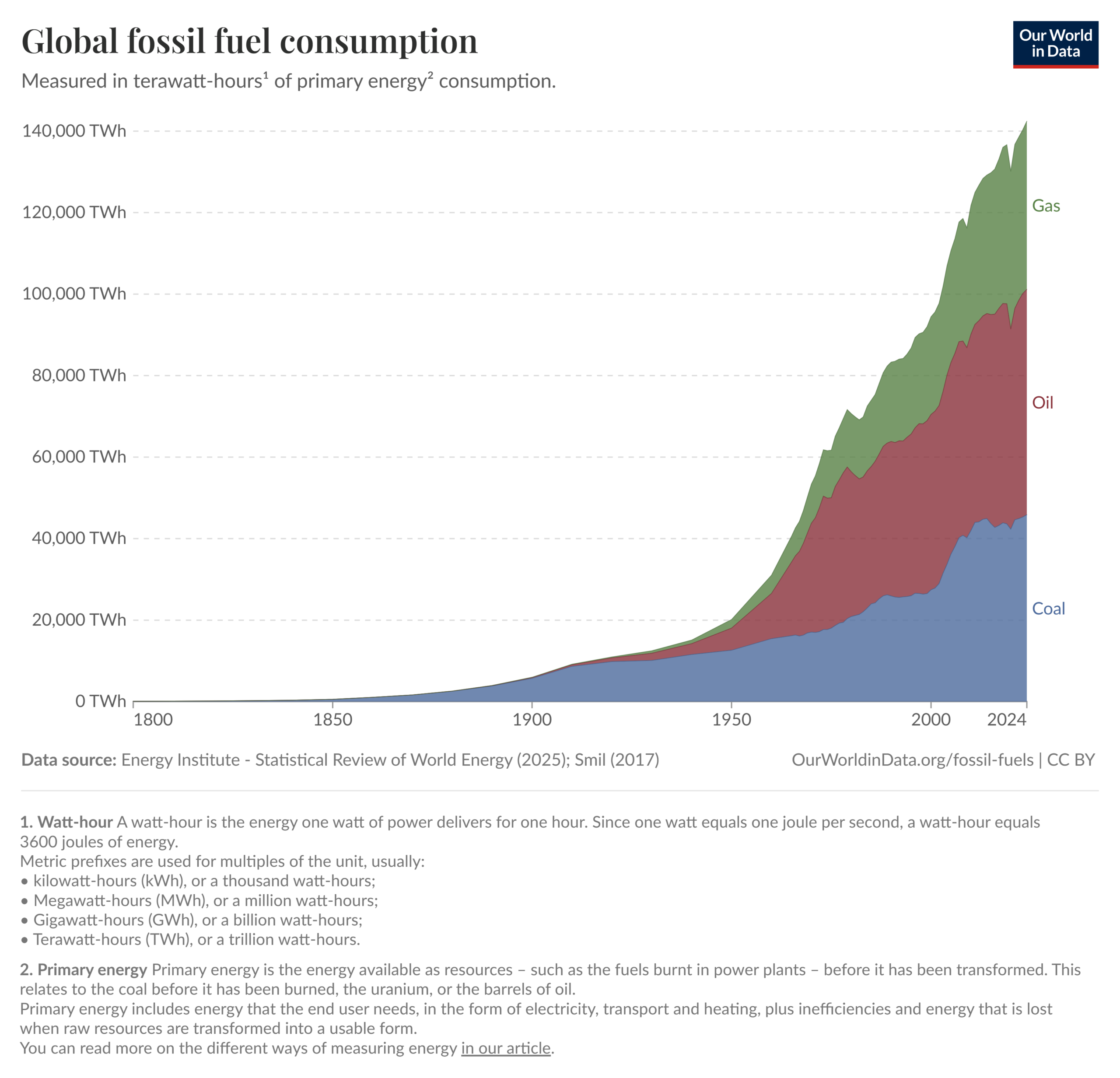
After World War Two, oil overtook coal to become the worlds principal fossil fuel. This paved the way for the ‘Great Acceleration’, during which demand for fossil fuels, monetary wealth, and ecological degradation grew exponentially. Oil had the unique advantage to be used flexibly for (1) electricity, industry, and heating; (2) transport; and (3) petrochemicals. As all three were interlinked, an increase in one area caused an increase in the other two, leading to self-reinforcing dynamics of growing oil consumption. These outcomes, however, were not some automatic or logical results of the diffusion of oil but rather an expression of capitalism’s deeper logic and ongoing colonialism. Oil companies’ pursuit to get a foot in even more countries and expand the consumption of oil in more domains such as petrochemicals is an expression of capitalism’s continuous push to explore new markets and commodify all aspects of life. For example, the green revolution would not have been possible without chemical fertilisers and pesticides. Oil became intertwined with the European post-war capitalism, synonymous with European development (or the Golden Age), and an extension of colonial exploitation.
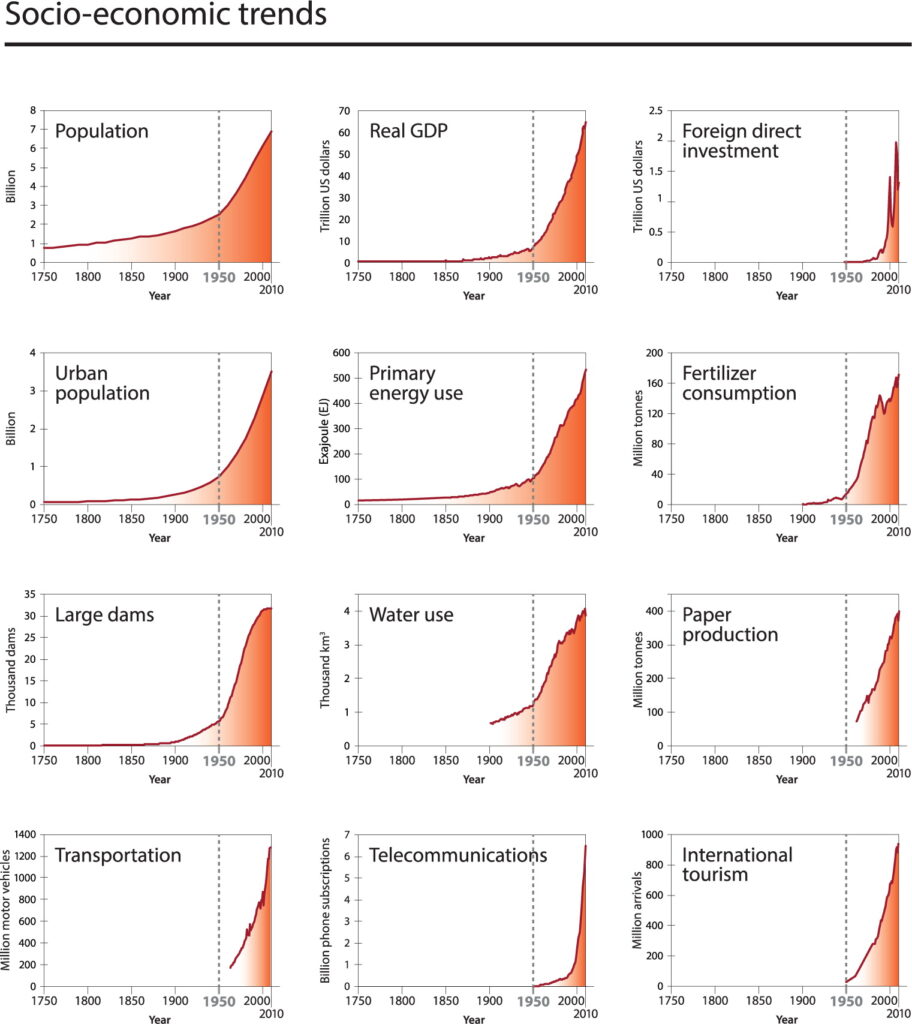
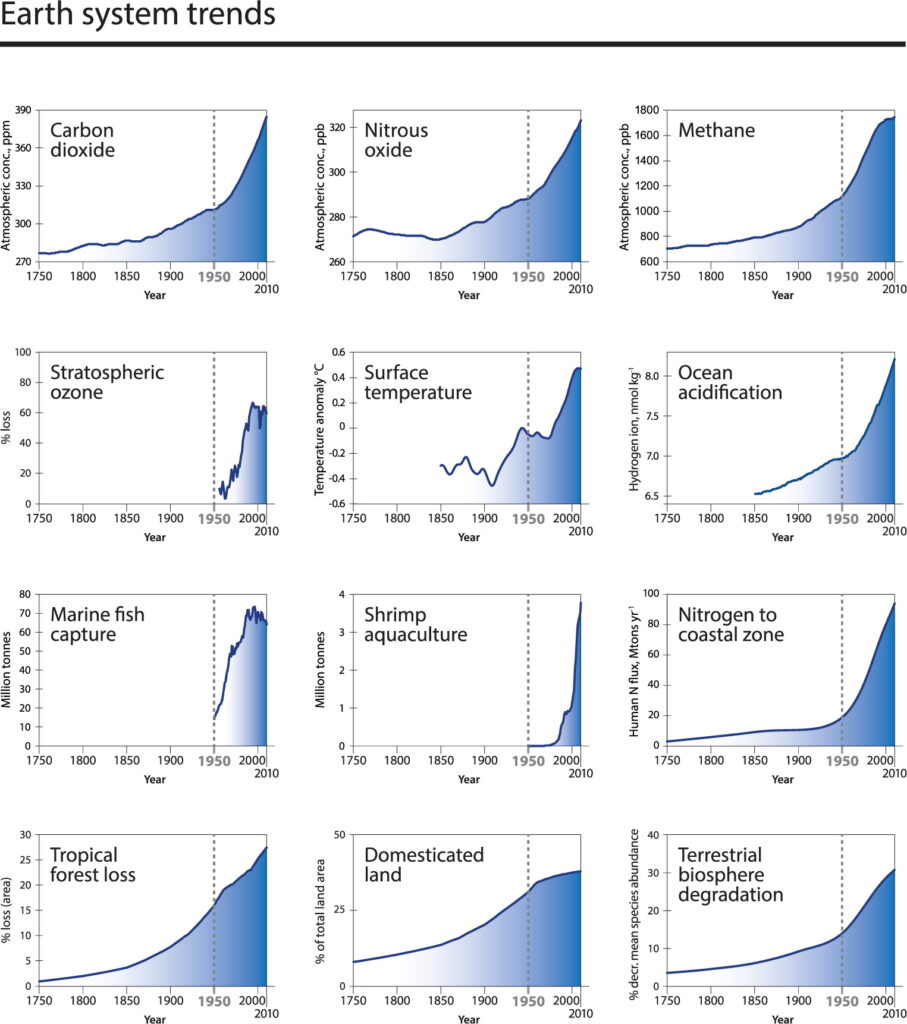
Figure 1: The Great Acceleration of earth system and socio-economic trends from WW2 until today (Steffen et al., 2015).
The Seven Sisters and Resistance to Colonialism
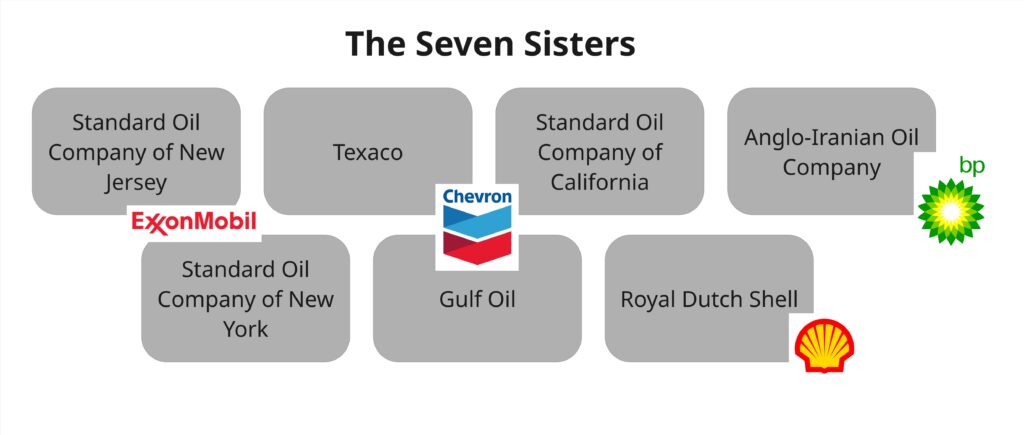
Colonialism and crude capitalism have been intertwined ever since. For example, Royal Dutch Shell was formed from the merger of the two colonial firms Royal Dutch Petroleum Company and the British Shell Transport and Trading Company, while the British Anglo-Persian Oil Company (APOC) was the British’ foot into Iran to exploit its oil. After World War One, the US oil industry wanted to gain their share of the colonial exploitation. Together with APOC, Shell, and Compagnie Française des Pétroles (CFP), two of Standard Oil’s successors Standard Oil Company of New Jersey (SONJ) and Standard Oil Company of New York (SONY) established the Iraq Petroleum Company (IPC) with a concession to exploit oil in Iraq for the next 75 years. The IPC valued its oil at a minimal price (posted price) to cover its costs. Since all oil companies made their profits through downstream activities, the real reason behind establishing the IPC was to hide the costs and gain control over production. Similar concession agreements were chosen in many other colonised countries, which eventually led to the emergence of seven large Western oil companies by the end of the 1930s, often referred to as the ‘Seven Sisters’: SONJ (now part of ExxonMobil), SONY (now part of ExxonMobil), Gulf Oil (now part of Chevron), Texaco (now part of Chevron), Standard Oil Company of California (SONC, now part of Chevron), Royal Dutch Shell, and the Anglo-Iranian Oil Company (AIOC, renamed from APOC in 1935, now BP).
After World War Two, oil colonialism sparked a wave of anti-colonial movements in large areas of the Global South. In Iran in 1951, Mohammed Mossadegh wanted to nationalise Iran’s oil resources but was ousted in 1953 by a British and US military coup, which installed the Shah as a puppet ruler who had no interest in sovereign oil extraction. In Egypt in the 1950s, Gamal Abdel Nasser wanted to nationalise the Suez Canal and establish closer relations with China and the Soviet Union. Despite an invasion by the British, French, and Israelis in 1956, Egypt managed to regain control of the Suez canal. In 1955, the Bandung Conference in Indonesia brought together 29 countries which recently gained independence to explore ties outside the Cold War powers. Participating countries agreed to exchange information on oil, such as remittance of profit and taxation.
In 1959, after a series of meetings led by Abdullah Tariki from Saudi Arabia, members of the Bandung Conference agreed to increase the government profit share to 60:40 and establish national oil companies which have expertise up- and downstream. In 1960, Venezuela, Iran, Saudi Arabia, Iraq, and Kuwait announced the formation of the Organization of Petroleum Exporting Countries (OPEC), then together responsible for around 37% or global crude production. Soon after the establishment of OPEC, protests against the ruling forces emerged in Saudi Arabia, Iran, and the Gulf Sheikhdoms and were squashed with the support of the USA. For example, in 1964, King Faisal of Saudi Arabia defeated the Free Princes movement with the support of the USA. In Iraq, the USA supported a coup which brought the Ba’th party to power, ultimate leading to massacres of thousands of communists and left-wing militants. In 1965, Indonesian prime minister Ahmad Sukarno was ousted by a US supported coup, which led to the killing of over a million Indonesians. The USA also supported Israel during its war against Arab states in 1967 to cement Israel as a fundamental leg of US power in West Asia. All in all, the USA was heavily involved in mass killings against revolutionary forces to maintain their hold onto oil in the Global South. These colonial actions by the US ultimately transformed OPEC from a revolutionary project into an organisation which enriches the local elite.
Oil Crises, Financialisation and Liberalisation
In the late 1960s, there was an overaccumulation of US dollars around the world. As it became increasingly difficult for the USA to maintain a fixed value of its currency in terms of gold, in 1971, US President Richard Nixon stopped the convertibility of gold to USD, which ultimately depreciated the currency. Many OPEC countries increased the posted price, as their large dollar reserves were valued less and they had to pay more for their imports. The Seven Sisters and other companies, who used the posted price for their tax reference price, passed the increase in posted price directly to the consumer. The price increase culminated in 1973, when Israel was involved in the Yom Kippur War. Arab OPEC members put in place an oil embargo against countries such as the USA and the Netherlands, who supported Israel during the war, leading to further price increases. However, oil production could have easily been increased in other countries, especially since most production was dominated by the Seven Sisters. The alleged oil scarcity was used as an easy scapegoat for rising prices and shortages, helping consolidate industry. During the oil crisis, arguments around deregulation, monetarism, and fiscal austerity gained momentum, all of which are core goals of neoliberalism.
Another important aspect of Gulf countries holding large USD reserves was that they were unable to absorb the large inflow of USD and translate this into local economic development. These countries became major exporters of capital, to a large extent by investing in financial markets in the USA and Europe. This international financial market, which was and is dominated by Western powers, would establish the USA and the USD as primary modes of world dominance, creating a new fundamental dependency between the Western World and West Asia. On the one hand, oil revenues of Gulf states flowed back into the US economy, providing an important source for global oil demand. As the USA and Arab countries’ dependence on the petrodollar grew, the ruling monarchies increasingly relied on US support to counter nationalism and agitation from left forces. Military sales from the USA to Gulf states increased the ties, leading to a weapon-petro-dollar circulation dynamic between those regions. An important reason why the US chose Gulf states as their partner is that the other West Asian countries’ class and social structures were politically too risky. Gulf states, contrary to other West Asian countries, had a rather small population and the workforce was mainly made up of migrant workers from South Asia and Africa. Their racialised and securitised class structure inhibited attempts to overthrow Gulf State’s capitalist class and this highly stratified class structure in Gulf States are vital for the reproduction of global US power. On the other hand, Euromarkets, which were de-regulated European financial markets mainly located in the City of London, were another factor which paved the way for the new financial order. The City of London operates independently from the British economy and has little limits and oversights on currency, taxes, deposits, and so forth. The City of London is connected to a spider web of offshore zones which enables financial institutions to control international lending and borrowing of firms and governments. This spiderweb profits directly from neoliberalism and the economic policies imposed by the International Monetary Fund and World Bank on Global South countries.
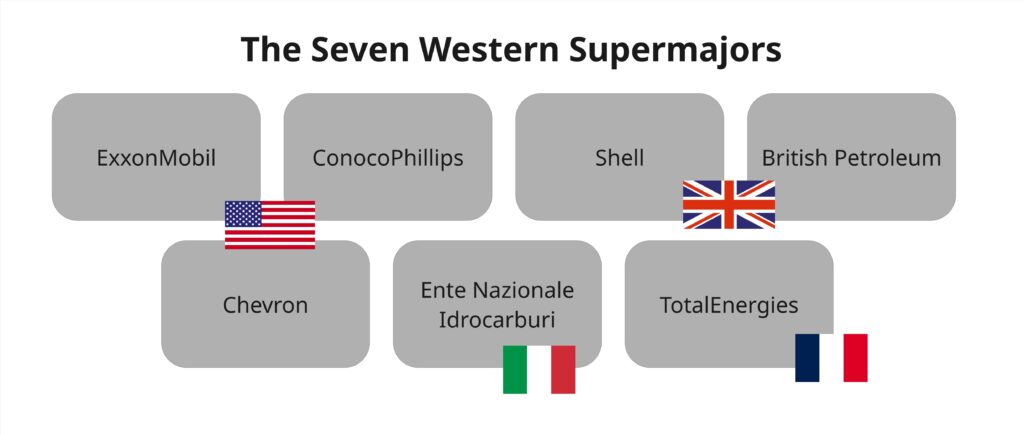
In the late 1980s, more oil was traded on spot markets and, as new traders and other stakeholders entered the oil economy, the diversity of actors in the oil industry increased substantially and with it the circulation of oil in global markets. This transformed oil from a physical into a financial asset which can be traded regardless of physical consumption. This eventually increased the ties between crude capitalism and financial markets, which co-developed tightly since then. When Margaret Thatcher sold the remaining British shares of British Petroleum (former AIOC) in 1987, she set in motion a wave which led to the privatisation of almost all Western oil companies which have been (partially) owned by the state. Privatised companies were pushed to maximise shareholder return, causing them to lay off staff and outsource competencies to specialised firms. The internal competition between different parts of the firm increased too, ultimately giving rise to further industry consolidation. By 2000 the US had nine vertically integrated oil majors, down from 24 in 1980, with concentration being most prominent in downstream activities. This eventually led to the creation of the seven Western oil supermajors ExxonMobil (USA), BP (UK), Shell (UK), Chevron (USA), ENI (Italy), TotalEnergies (France), and ConocoPhillips (USA).
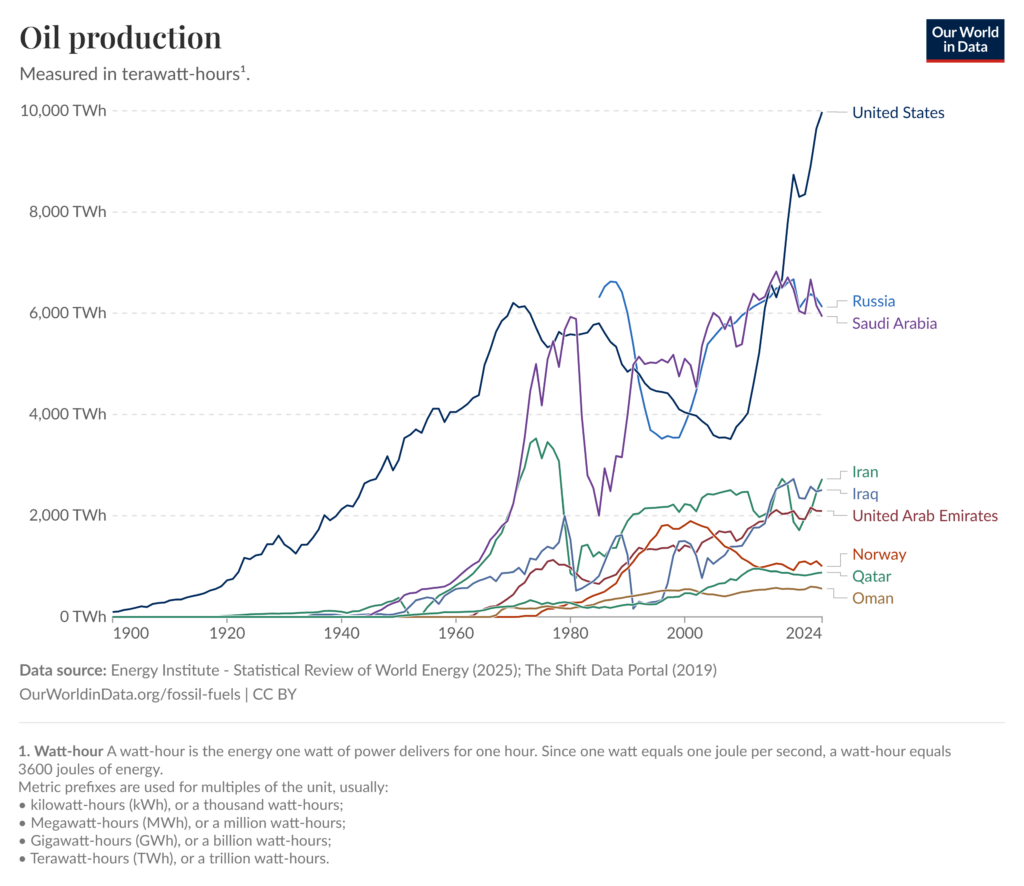
With the economy growing in China and the wider Asian region, their demand for crude increased substantially too. The Gulf states as well as smaller producers profited from this oil boom. Since oil prices were relatively high during the growth period, non-conventional oil and gas supplies increased as they became financially attractive. The North American shale revolution took place from 2007 – 2014, leading to an ecological and social disaster with forced displacements and state-backed violence against indigenous populations. Eventually, the USA overtook Saudi Arabia as the largest global oil producer in 2014, to a great extent thanks to the Asian oil boom. Generally, oil consumption moved more and more eastwards, shifting regional interdependencies. Chinese firms got a larger foot in the West Asian oil sector through companies such as NOC Sinopec. While the US dominance is nowhere to be challenged, USD denominated oil trade is gaining pressure from RMB denominated trade, ultimately giving China the opportunity to bypass US sanctions in case of hostile actions. New ties between Asia and the Gulf states are currently being built, creating new barriers to break free from a fossil free world.
Oil in Transition?
Oil majors are making record profits from fossil fuels and it is unlikely that they will change their profitable business model for climate goals. Fossil fuel companies invest large sums into misinformation campaigns to spread doubt about climate science. Furthermore, oil companies pretend to support climate goals through their greenwashing activities and pushing the net zero emissions narrative, which allows them to deploy carbon capture infrastructure. This infrastructure enables them to deplete more oil from declining fields and unconventional shale oil and gas reservoirs which would have otherwise been unrecoverable. With state subsidies going into the billions, carbon is set to become another commodity and frontier of crude capitalism. Hydrogen, particularly blue, is another attempt of fossil industries to retain a central position and a strategy to distract or lock-in for continued fossil fuel use.
Many of the new technologies which are supposed to lead to emission reductions do not tackle the current energy intensive, individualised, and commodified patterns of consumption and economic logics. Technological solutions ignore the historical roots of our problems today and salvation politics defers deliverance to somewhere in the future (read here about the Innovation Fata Morgana). The current approach requires a political passivity to maintain the status quo which is wrapped in techno-fetishism. Even though renewables may alter infrastructure power dynamics, they will leave vertically integrated oil companies unaddressed.
To lead the world towards a sustainable future, it is important to understand that (i) the energy infrastructure is in the hands of a few oil conglomerates; and that (ii) there is more to the story than pure corporate greed but deeper structural forces which have embedded oil in every single aspect of modern life. A system-wide transformation would mean to de-commodify our social existence, dismantle oil companies and polluters, demilitarise, encourage changes in social behaviour, tackle the consumption of the ultra-rich, and prioritise energy efficiency as well as conservation.
An Attempt to Summarise
As this short outline of crude oil’s history shows, since its inception, oil was tightly related to geopolitics. On the one hand, the US and Western oil sector profited enormously from the two World Wars, colonialism, and foreign interventions. On the other hand, oil and its products were integral factors which enabled these processes in the first place. This dualism between crude oil and geopolitics is not an accidental feature but a direct result of the capitalist mode of production. We therefore find ourselves in a decade long process wherein crude capitalism reshaped the world politically, economically, and ecologically. Crude oil today lies at the core of an imperialist, militarised, capitalist, financialised, ecocidal, unequal, patriarchal, and authoritarian superstructure which holds the global majority hostage, and wants to swallow up even larger parts of the world.
Crude Capitalism’s Next Push
Recent geopolitical events are evidence that crude capitalism is a defining feature of the present and will shape the world for the decades to come. Examples abound, here I will outline the centrality of crude capitalism in different forms in the (i) the war in Ukraine, (ii) the kidnapping of Venezuela’s Nicholas Maduro, (iii) the US-Israeli attack on Iran, (iv) the siege on Cuba, and (v) the green transition. While the outcome and trajectory of all events is uncertain, they will together lead to long-lasting changes in the global geopolitical fabric.
War in Ukraine
The Russian invasion of Ukraine in February 2022 had immense effects on energy markets. The immediate impacts were felt on natural gas markets due to the severe price increases particularly in Europe. In the first years of the war, Europe attempted to change the natural gas flows and the USA capitalised on it. LNG exports of the USA to Europe skyrocketed within a short period of time, allowing the US gas industry to generate value from the war. Today, the EU and USA want to isolate Russia’s crude oil business through boycotts, piracy, and geopolitical pressure. India, who has long imported Russian oil (and at a discounted priced since the war in Ukraine), in a recent trade agreement with the USA, agreed to stop purchasing Russian oil in favour of US crude. Only recently because of the US-Israeli assault on Iran are the USA loosening their sanctions on Russia to reduce the strain on global fossil fuel markets. The trade of fossil fuels, particularly crude oil but gas too, is being reshaped as a result of this war, and one of the largest profiteers from the War in Ukraine is US fossil business. In this case, the war is used by the USA to increase their share in global oil trade as well as natural gas.
Kidnapping of Nicholas Maduro
Venezuela has been a target of colonialism over the past decades, for example the Seven Sisters exploiting its oil resources since their discovery in the 1920s. Having the largest oil reserves in the world, it is logical that Venezuela presents a resource frontier for crude capitalism. The country has been targeted by US oil interests in the past decades, which involves regular exploration agreements, sanctions, and, most recently, the illegal abduction of its president Nicholas Maduro by the USA. The aim of this illegal action is to transfer the Venezuelan oil wealth into the hands of leading US oil firms, such as Chevron or ExxonMobil. More importantly, it is to ensure that Venezuelan oil does not get into the hands of the US adversaries but can be used by its own military-industrial complex to keep powering exploitation and warfare. In the Venezuelan case, oil took up the dual role of being a sanctioned resources and the goal of hostile action.
USA and Israel Assaulting Iran
The recent attack of the USA and Israel on Iran is another instance of crude capitalism shaping geopolitics. It is obvious that nuclear weapons, democracy, and women’s rights are just a pretence to gain control over the country. By getting control over Iran, USA and Israel can redraw the geopolitical cards in West Asia, ultimately giving them access to Iran’s vast oil resources and its landmasses. The US intervention in Iran goes beyond Iran’s borders and is an attempt to gain full control over oil trade in the region. However, by having access to its own oil resources as well as due to topographical circumstances, Iran currently has immense power to push back and uses crude oil for its own defence by waging a war on the global economy. This war on the global economy is waged by severely disrupting oil trade through the street of Hormuz and bombing US military and oil assets in neighbouring Gulf states, who act on behalf of the USA due to the weapon-petro-dollar circulation which keeps their polities alive. In the case of the current foreign intervention in Iran, crude takes the position of an asset which ought to be controlled, a commodity which is used as a weapon, and a target for bombardments to inflict damage to the local population.
Siege on Cuba
The US embargo on Cuba since 1960 represents one of the longest lasting sieges in the world’s history. The goal of the siege on Cuba is to starve off the island and to maintain continuous conflict in the region to justify further armament in the USA. The siege on Cuba is so severe that the UN General Assembly adopted a resolution which urges the USA to lift its economic embargo against Cuba, with only USA and Israel voting against it. Cuba takes up an interesting position in crude capitalism, as it is a necessary condition for the USA without which it could not justify its investments in the military-industrial complex domestically during times of relative peace. In the current intensification of the siege, oil is used as a weapon by preventing imports to the island. Hence, the siege on Cuba, from a crude capitalism point of view, on the one hand serves as a domestic justification for the growth of the oil using military-industrial complex, and, on the other hand, shows how oil can be used as a weapon of geopolitical warfare.
The Green Transition
A non-obvious frontier of crude capitalism can be found in the so-called ‘Green Transition’ towards alleged sustainable technologies. Crude capitalism imposes an energy intensive extractive lifestyle onto societies, which is elevated by many current transition strategies. A sustainable future is expected to be delivered by deploying new technologies, the creation of new markets, and more energy-intensive forms of living. The Green Transition does not question the centrality of fossil fuels as it seeks to find substitutes for finite fossil resources. For example, circular economy strategies are here to maximise profit, carbon trading is introduced as a new commodity frontier, and electric mobility serves to keep the fossil car industry alive. Even worse, the entire chemical industry is spared from transformational change and rather elevated to a new level by being at the centre of the green transition. Crude capitalism, therefore, sees the green transition as an opportunity to expand fossil industries into new markets and save existing industrial structures.
Conclusion
Marco Rubio’s speech at the Munich Security Conference was filled with fascist, ethno-nationalistic rhetoric. By advocating for a new wave of colonialism and domination, Marco Rubio gave us a glimpse into the future the USA is preparing for. The USA is seeking to increase its dominance on the world, delivered by and for oil. Crude capitalism will, hence, continue to play a central role in the future to come. As the past century shows, our world today is a direct result of the decisions of the past. The developments did not happen automatically but were conscious decisions taken by actors pursuing the interests of crude capitalism. This also means that an alternative path, past, and present could have been possible, one which does not build on continuous exploitation, domination, and colonialism. It is upon the people in this world, particularly people with white privilege, to create an environment which enables the flourishing of an alternative world which does not build on crude capitalism.
Leave a Reply