By Ivo Wakounig
Evidence-based policy making has become a new buzzword in policy debates. More and more people are calling for policies to be built on evidence, for example in the fields of climate change and energy transitions. However, what on the surface may seem like a genuine attempt to implement the right policies to accelerate transformative change, is in reality often a misleading rhetorical object without any real substance. This rhetorical object is often used by elite actors to advocate for a certain way forward. Evidence-based policy making creates the illusion of objectivity and rationality behind making certain choices. However, in most cases, not only is the factual basis conflicting or uncertain, but the facts are often cherry-picked. In these situations, facts, beliefs, and values get conflated into an imaginative objective truth, usually to reduce objection and resistance against a certain way forward. Science, usually the supplier of such evidence, is then being dragged into political conflict, ultimately damaging its work.
In this article I will summarise the insights of some of the academic literature which I have read in the nexus of policy making, science, and evidence-based policy making. See this as an attempt to present some important debates in the field and to critically inspect this widely used phrase. I think that in these current times we have to understand what we imply with our language and the things which we advocate for, hence, we should find better ways to advocate for certain policy positions.
Some Definitions
First things first, definitions. What is evidence? Evidence can have many meanings and interpretations. Cairney (2016) defines evidence as an argument backed by information, and different types of evidence are produced in a different way. Forensic evidence is produced in a forensic, scientific evidence in a scientific way. However, the production of evidence is not value-free (Cairney, 2016) and people make use mental models to make sense of evidence (Davidson, 2017).
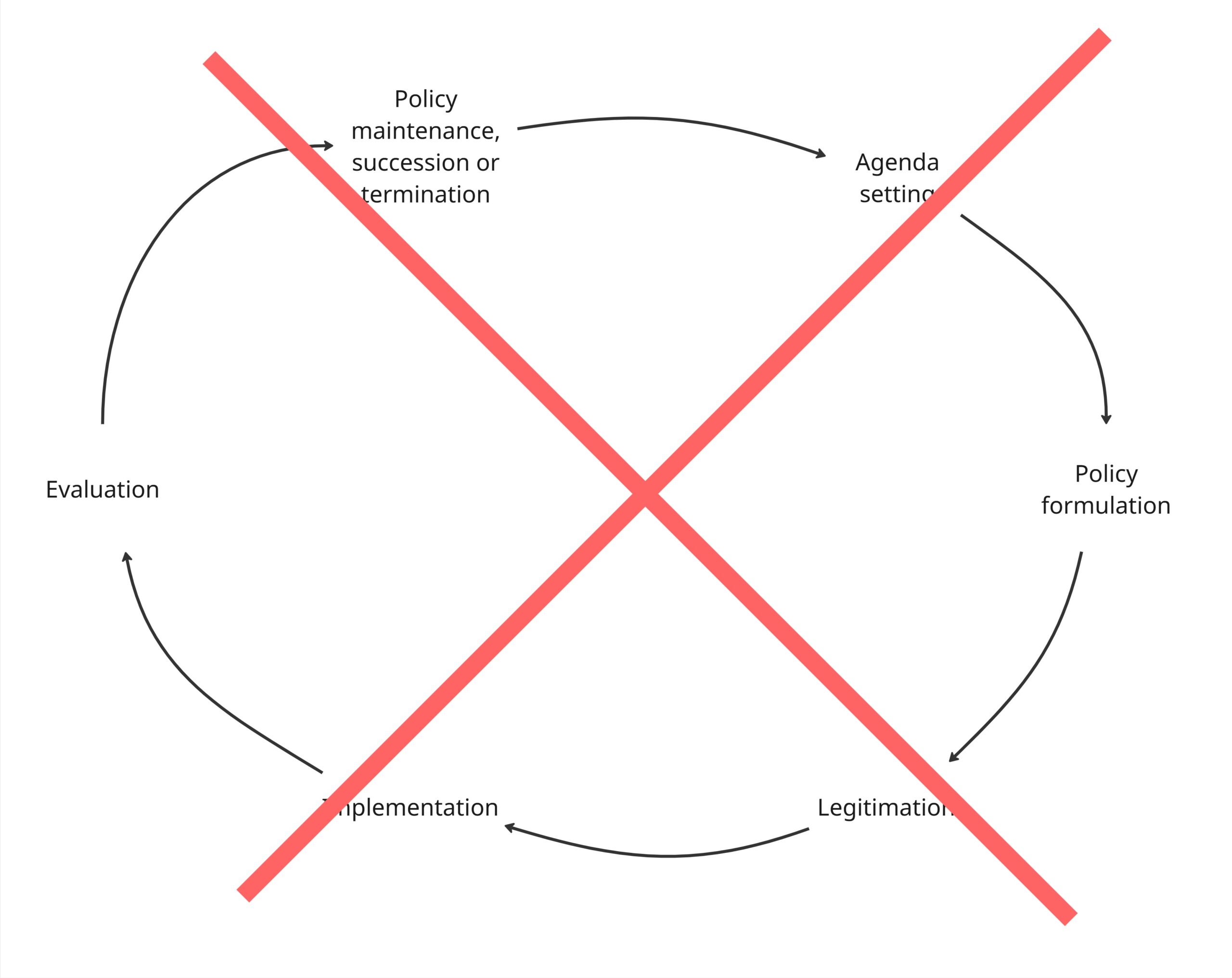
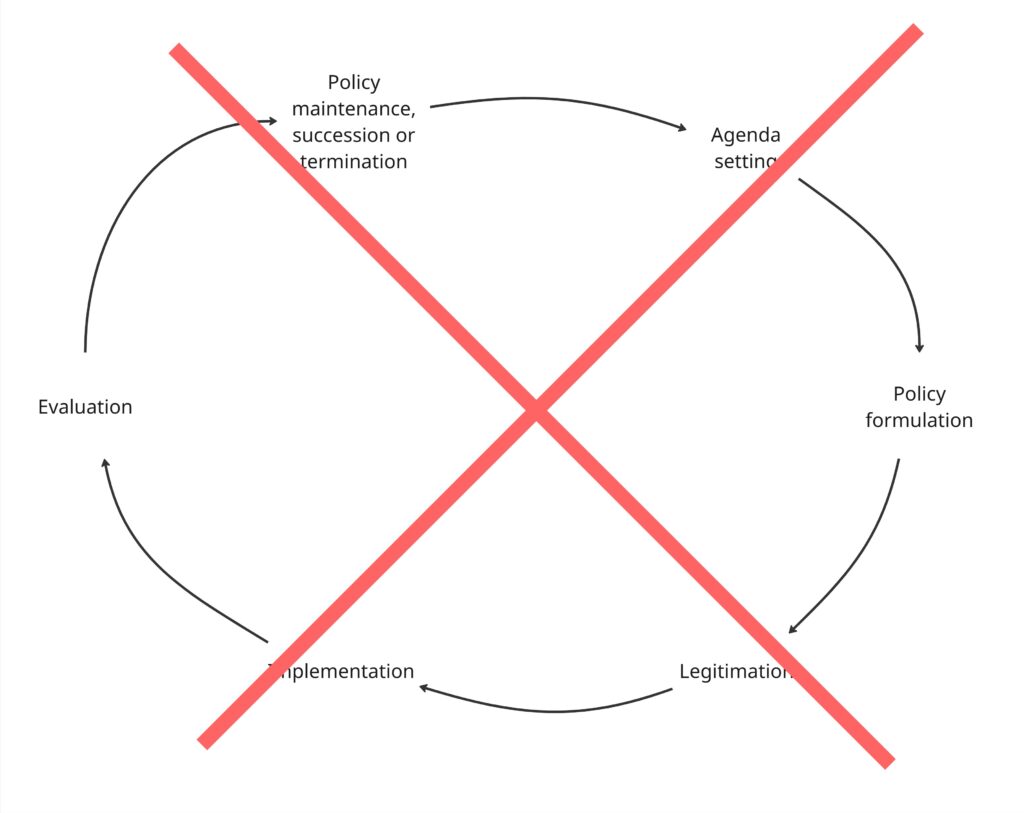
What is policy making? Policy making is the act of designing and implementing policies, which can be described as the sum of government actions to reach an intended outcome (Cairney, 2016). In popular debates, policy making is often represented as a multi-step, cyclical, linear process (Figure 1). However, as Cairney (2016) argues, this representation is misleading, as it does not represent the messy, unpredictable, and highly contentious policy making process. Hence, instead of seeing policy making as a logical sequence of events, we should rather see it as a highly political and messy process laden with conflict and uncertainty.
Policy Makers need Information
Having established what evidence and policy making means, we will now move into some academic debates about evidence-based policy making. Firstly, it is crucial to start with the people who make policy to understand what the role of evidence-based policy making can be. Policy makers are central in the policy making process, and Cairney (2016) defines them as the people who make the policies, influenced by (un)elected participants and people as well as organisations, which make decisions collectively, acknowledging that there is an overlap between the people who make and influence policy.
Policy makers often have to make decisions in uncertain contexts, wherein problems can be understood differently by different people (Cairney, 2016). Framings and narratives are essential aspects of policy making (Hermwille, 2016), and all actors have bounded rationality, their decisions are (un)consciously value-based, and policy solutions often exist before the policy problem (Cairney, 2016). As new problems constantly arise, policy makers’ demand for information is highly unpredictable and contingent on the external environment. This aggravates policy makers’ reliance on already existing information, heuristics, and mental models, as they lead to faster decisions during uncertain times (Cairney, 2016). Finally, the solutions which policy makers come up with have to be politically feasible and supported by a sufficient number of stakeholders, adding an additional layer of complexity to it.
Scientists’ Position in Evidence Based Policy Making
As many equate evidence with scientifically curated knowledge, science is being put in a special position. Scientists can take up multiple roles in evidence-based policy making, for example by shedding light on (novel) problems, analysing their mechanics, and developing solutions for those problems. However, just as any other stakeholder, scientists’ work is highly value-laden and not free from interpretation, let alone objective (Cairney, 2016). Furthermore, scientists’ understanding of evidence differs from policy makers’, who often rely on grey literature aside of scientifically curated evidence. Scientific evidence is, hence, only one of the many sources of information policy makers rely on (Cairney, 2016; Davidson, 2017). Policy makers’ and scientists’ ways of working and cultures differ substantially too, for example due to different language, timescales, certainty, belief systems, and so forth. This means that scientists need to go beyond curating or producing scientific knowledge and translate those into legitimate knowledge, which builds on public awareness and support (Cairney, 2016).
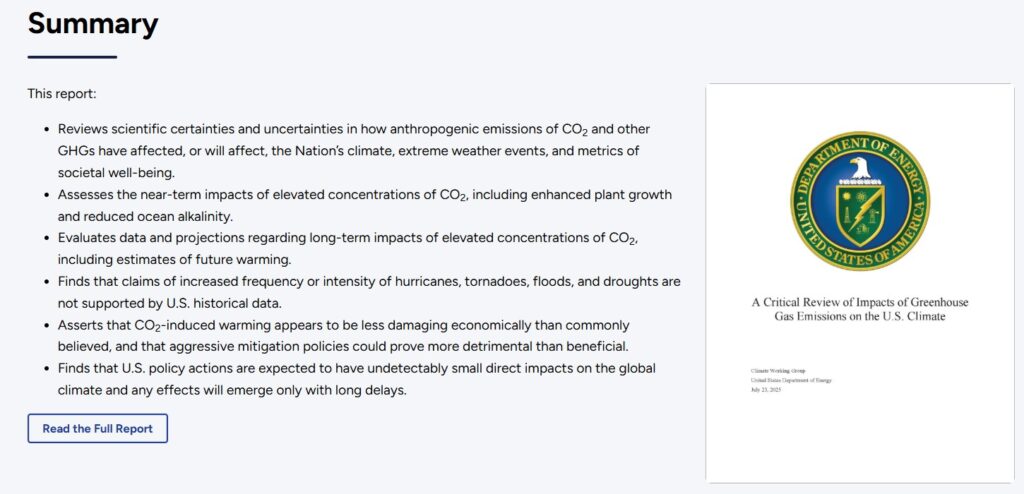
At the same time, there is a risk that scientific evidence is used selectively by parties to justify their political agendas, leading to the politicisation of science (Pielke, 2004). According to Pielke (2004), major tensions arise because science is rather open ended, trying to explore multiple views and pathways, whereas policy making is reductionist, as the goal is to find solutions and reduce the number of options. This can go as far as shifting political debates into the scientific, e.g. who uses which kind of scientific evidence, leading to the politicisation of science or the intrusion of science by political debates, ultimately hampering the tasks scientists have to fulfil in the first place (Pielke, 2004). One recent example supporting that claim is the weaponisation of climate science by the Department of Energy of the Trumpian US, where scientific findings are selectively arranged and misinterpreted to support their regressive fossil agenda (see here). Here we can see first hand how political agendas are put into the scientific to cast doubt on well-established scientific consensus.
Influencing Policy as a Scientist
The above discussions may imply that scientists do not have an important role to play in policy making and should rather stick to research. However, despite the obvious tensions in supporting policy making with scientific evidence, there are still various activities scientists can undertake to ensure that some of their findings can feed into policy making. Oliver & Cairney (2019) compiled a list of dos and don’ts of influencing policy as a scientist, consisting of:
- Produce high quality research: Conduct highly reliable, accurate, and robust research.
- Make your results relevant for policy: Disseminate results through channels such as blogs, briefs, and social media.
- Understand the policy process: Know how policy making works and which decisions are being made when by whom.
- Be accessible to policy makers: Create and nurture professional relationships with policy makers by engaging with them regularly.
- Decide if you want to be an ‘issue advocate’ or ‘honest broker’: Decide whether you want to share new information or recommend alternative policies.
- Build networks: Get to know policy makers and build coalitions of allies helping strengthening the collective voice.
- Be ‘entrepreneurial’: Learn how to sell your story and convince people about your findings.
- Reflect on your activities: Regularly check whether your engagement helps your research and which impact your activities have.
This underlines that if scientists want to influence policy making with their evidence and advice, they need to understand the science of policy making and how policy decisions are made in practice (Cairney, 2016). Scientists would need to be more active agents in the policy making process and need to understand decision making through their own and others’ belief networks. Policy makers’ contexts, ideas, framings, institutions, norms, rules, and so forth would need to be taken into account to ensure that much of the scientific evidence can penetrate into policy making (Cairney, 2016).
The Meaninglessness of Evidence-Based Policy Making
So what is evidence-based policy making then? From the above discussions we can deduce that evidence-based policy making is an extremely broad concept without too much added analytical value. This is because evidence in itself is ambiguous and has multiple facets, while policy making is a highly complex and unpredictable process. Since policy makers already make use of different types evidence in the policy making process, evidence-based policy making describes the current way of policy making. This concept just emphasises the evidence-component of policy making, without adding value to the debate. Therefore, using this term just creates an illusive construct around policy-making which bloats up the evidence component. Compare it with imaginary concepts such as policymaker-based policy making and complexity-based policymaking. This sounds odd, right?
We can then ask the question why people keep using this concept in the first place. On the one hand, people may be unaware of policy making processes and the repercussions of using rhetorical constructs such as evidence-based policy making. The desire for evidence-based policy making then often comes from stakeholders who are frustrated with the current mode of policy making and the policy decisions which are being made, as they do not meet their expectations. From this perspective, evidence-based policy making is an understandable fix to ensure that their policy expectations are met.
On the other hand, evidence-based policy making can easily be used as a tool to criticise alternative policy pathways by appealing to the rhetorical object. Evidence is then used as an argument to denounce the facts and processes which policy makers rely on. Using this rhetorical object helps veil critique in some illusive objectivity to downplay the role of values, norms, and opinions in policy making. This construct avoids conflict by muting other viewpoints and labelling them (indirectly) as non-evidence based. Such a rhetorical object is particularly appealing in societies where having opinions and different views is branded as ideological and where political debates are surrendered to the market. From this perspective, evidence-based policy making is just a tool to hide political agendas and overcome resistance from opposing parties.
Science is being dragged into an environment where scientists’ findings and work are used selectively to support certain agendas, many of which they do not even support in the first place. This puts scientists into highly vulnerable and difficult positions, as they are being placed involuntarily in the conflict laden political process. This is not to say that science and scientist are not political, in fact, they are highly politically laden and relevant (more maybe in a later article). However, this process forces political dynamics into the scientific and ultimately hamper scientific progress. Scientists would be forced to re-evaluate (the framing of) their research to immunise their research from being used by political actors, or scientists would inject certain framings into their research to ensure that their research is being taken up by political actors and used in policy making. Both are examples of scientific misconduct. As there are ample ways through which scientists can support policy processes, scientists should take the earlier recommendations seriously and engage in the policy making process if they want their findings to be taken up by policy makers.
Conclusion
I was always confused whether the term evidence-based policy making means that policies are made based on evidence or whether the process of policy making is based on evidence. Most researchers and stakeholders tend to mean the former, leading to the many tensions highlighted in this article. We should be wary of using rhetorical objects such as evidence-based policy making in debates, as they say more about us than the solutions we propose. I would recommend scientists to reject this concept, as it can significantly hamper our scientific work and worsen the quality of our work. Just as politics should not dictate science, science should not dictate politics.
References
Cairney, P. (2012). Understanding public policy: Theories and issues. Palgrave Macmillan.
Cairney, P. (2016). The Politics of Evidence-Based Policy Making. Palgrave Macmillan UK. https://doi.org/10.1057/978-1-137-51781-4
Davidson, B. (2017). Storytelling and evidence-based policy: Lessons from the grey literature. Palgrave Communications, 3(1), 17093. https://doi.org/10.1057/palcomms.2017.93
Hermwille, L. (2016). The role of narratives in socio-technical transitions—Fukushima and the energy regimes of Japan, Germany, and the United Kingdom. Energy Research & Social Science, 11, 237–246. https://doi.org/10.1016/j.erss.2015.11.001
Oliver, K., & Cairney, P. (2019). The dos and don’ts of influencing policy: A systematic review of advice to academics. Palgrave Communications, 5(1). https://doi.org/10.1057/s41599-019-0232-y
Pielke, R. A. (2004). When scientists politicize science: Making sense of controversy over The Skeptical Environmentalist. Environmental Science & Policy, 7(5), 405–417. https://doi.org/10.1016/j.envsci.2004.06.004
Leave a Reply